
Sermon by Rev. Charmain Bailey, with additional commentary by Rev. Sandra Nixon
Scripture: Mark 1: 29-39
Reflection: Jesus in the Village
Rev. Charmaine Bailey
At the dawning of 1942, 11,000 troops were deployed on a special mission to construct a supply route between Alaska and Canada. Among the 11,000 were 4,000 Black segregated soldiers. They were segregated to their own infantry because the thought at the time was that the Black soldiers were just not as capable as White soldiers.
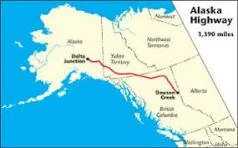
For this particular mission, the Black soldiers were tasked with carving out the initial route from the North by clearing a path at least 12,000 kilometers long through virgin wilderness, and meeting up with the path that the White soldiers would be clearing from the South. That path was the foundation for what we now know as the Alaska Highway. How many of us have traveled that highway in these times?
But imagine that task… clearing not just brush but aged forest trees for 12,000 kms, in temperatures that ranged from –32 C° to –55 C°, and everything else that goes along with being exposed to such harsh conditions. But for these 4000, the weather elements were the least of what they had to be concerned about. Because even with such sacrifice to their physical well-being, they also had to contend with discrimination, segregation, and oppression.
These 4000 who were carving out a supply route from Alaska to Canada for over 8 months had to contend only with the supplies that were delivered to them along the route, since they were strictly forbidden to enter the settlements they would encounter along the way. There was no restriction to the White soldiers entering the towns that they would encounter, but it was strongly forbidden for the Black soldiers to enter the villages of the mostly Indigenous people they would come into contact with.
In our scripture of Mark 1: 29-39 we experience a busy Jesus—“Jesus be hustlin’”. Early morning prayers with the guys, then he got wind of Simon Peter’s mother in law being sick, so he went to attend to her. Then by afternoon and into the night people were bringing many sick and hurting people for him to heal and minister to.
That is what we call a full day. By the next morning he was prepared to start all over again. He commenced his day with morning prayers, but this time he decided to go alone. He needed to be renewed, refreshed, refueled to continue his work.
How many times do we need to find a way to renew our bodies and souls so that we may continue our work, whatever our work is? No matter who we are and what we do, we all get to a point where we crave that element of renewal. For some of us, like Jesus, that may look like some time alone, to reconnect with ourselves in quietness. For some of us, that is where we most encounter the Holy One.
For others, a refuel comes from being surrounded by people and feeling the love. For some of us, we are renewed by the interactions from the village, and in the village. Imagine how many of those Black soldiers would have done anything to be able to enter the villages they were passing by.
And imagine how beneficial it would have been for them if they could have experienced the hospitality and generosity of the Indigenous peoples of the area. The opportunity to feel warm acceptance from another peoples to soothe the pain of oppression of their own people. How would their lives had changed if they were allowed to go into the village? And whose lives would they have changed if they were allowed to go into the village?
In our scripture, after a busy day and an edifying morning, Jesus decided to change gears. He said: “I’ve done all I can do in these other places. Let us go somewhere else—how about we go to those nearby villages—so I can preach there as well. Because that is why I have come.”
I wonder: If Jesus was in the villages that the Black soldiers were forbidden to enter. What blessing, or perhaps healing, was blocked by the mandate forbidding them from entering the villages?
I am from Antigua in the Caribbean, and the people of my culture would say, “Don’t block my blessings.” How many blessings have we blocked with our NIMBY (“not in my backyard”) approach to people who are different from us?
To the homeless—not in my back yard. To members of the LGBTQIA + and Two Spirit community—not in my back yard. To the mentally ill and the drug addicts—not in my back yard. To folks who don’t look like me—not in my back yard. How many blessings have we blocked from folks who could use it the most? How many blessings have we blocked from ourselves by refusing to be neighbourly or hospitable?
Jesus says, “I have done a lot of work in these places, I’d like to spread the blessings around a little bit. Let us go somewhere else—how about we go to those other villages to preach? That is why I have come.” And we know what Jesus preached. Jesus preached love, compassion, and selflessness. Jesus urged his followers to love their enemies, to forgive others, and to care for the oppressed and marginalized.
He advocated for respect and fairness for those who had none. These sentiments resonate with the spirit of Black History Month, as it calls us to continue spreading the message of justice, equality, and hope, and to live the message of justice, equality, and hope. The message that Jesus took to the villages is the message we are called to stand on as people of goodwill and the people who celebrate Black history Month.
The message that Jesus took to the villages is a message of hope. Those segregated soldiers who laid the foundation for the Alaska highway swung those axes and those picks, and with every swing came a grunt of effort and pain, and through each wince of pain was a melody ejected, which no doubt was met with the harmony of another, because that is how we made it through the hard times.
Each grunt of pain wherein you could find a song was a song of hope. In the face of adversity, our people have persevered with the unwavering hope of Jesus. We are called to be messengers of that hope, sharing the vision of a better world where love and justice prevail.
Each year Black History Month reminds us that the struggle for justice and equality is an ongoing mission. We are called, like Jesus, to go to nearby villages, to spread the message of hope, and to work toward a world where all the Holy’s children are treated with dignity, respect, and equality. We are called to ensure that others aren’t hindered from the villages where the blessings of Jesus can be had.
May the lessons of history inspire us to be agents of change in our communities, sharing the message of love and justice for all, Amen.
+ + +
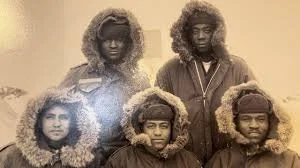
Some of the black soldiers who worked on the Alaska Highway in 1942-43.
Commentary by Rev. Sandra:
The Alaska Highway is one of the most legendary routes in North America, running over 2,200 kilometres from Dawson Creek, B.C., through the Yukon, to Delta Junction in Alaska.
It was built entirely with bulldozers, shovels and manual labour and was completed in 1943.
Although the completion of that highway was heralded as quite an accomplishment, the legacy of the Black soldiers who helped build it has long been overlooked. In fact, when the highway was completed, their role was reduced to a small historical footnote, with only a fraction of the photographs publicly shared showing any of the Black soldiers who contributed.
It wasn’t until 75 years later, in 2017, that the contributions of these men were publicly heralded for literally laying the foundation for the highway, and to was acknowledged that they did the toughest job, in the harshest conditions -felling countless trees, laying wood across the swamps and permafrost and covering everything in brush, branches and dirt so the engineers, contractors and civilian workers following behind could get through and complete the roadway.
I appreciate how Rev. Bailey draws a parallel between Jesus going into the villages - giving them an opportunity to be blessed by his wisdom and teaching and healing - and how the black soldiers building the highway were prevented from going into the villages they passed, depriving those villages of the potential blessings and solidarity those soldiers - another persecuted community - might have offered to another colonized community, and vice versa. In Charmain’s words, their “blessings were blocked”.
And I imagine that was the point. The white soldiers coming up from the south weren’t prevented from going into the indigenous villages. But there was that pesky risk that solidarity - and its cousin, resistance, might get a foothold if black soldiers were allowed into the villages.
And so, I’ll end by repeating Rev. Charmaine Bailey’s closing commissioning and prayer to us:
“We are called, like Jesus, to go to nearby villages, to spread the message of hope, and to work toward a world where all the Holy’s children are treated with dignity, respect, and equality. We are called to ensure that others aren’t hindered from the villages where the blessings of Jesus can be had.
May the lessons of history inspire us to be agents of change in our communities, sharing the message of love and justice for all, Amen.”
_____
The Rev. Charmain Bailey was born in Antigua and moved to Canada in 1995. She has served at Bedford and Central United Churches in Windsor, Ontario and Trinity United in London. Charmain became the first Black person to be commissioned in the history of The United Church of Canada, an honour she carries with pride and determination.